
The tamalada — why nobody makes a small batch
Masa, husks, a folding table and a lot of hands. A look at the Mexican tradition of making tamales together.
Written by Evelin from background reading · Oaxaca and kitchens across Mexico
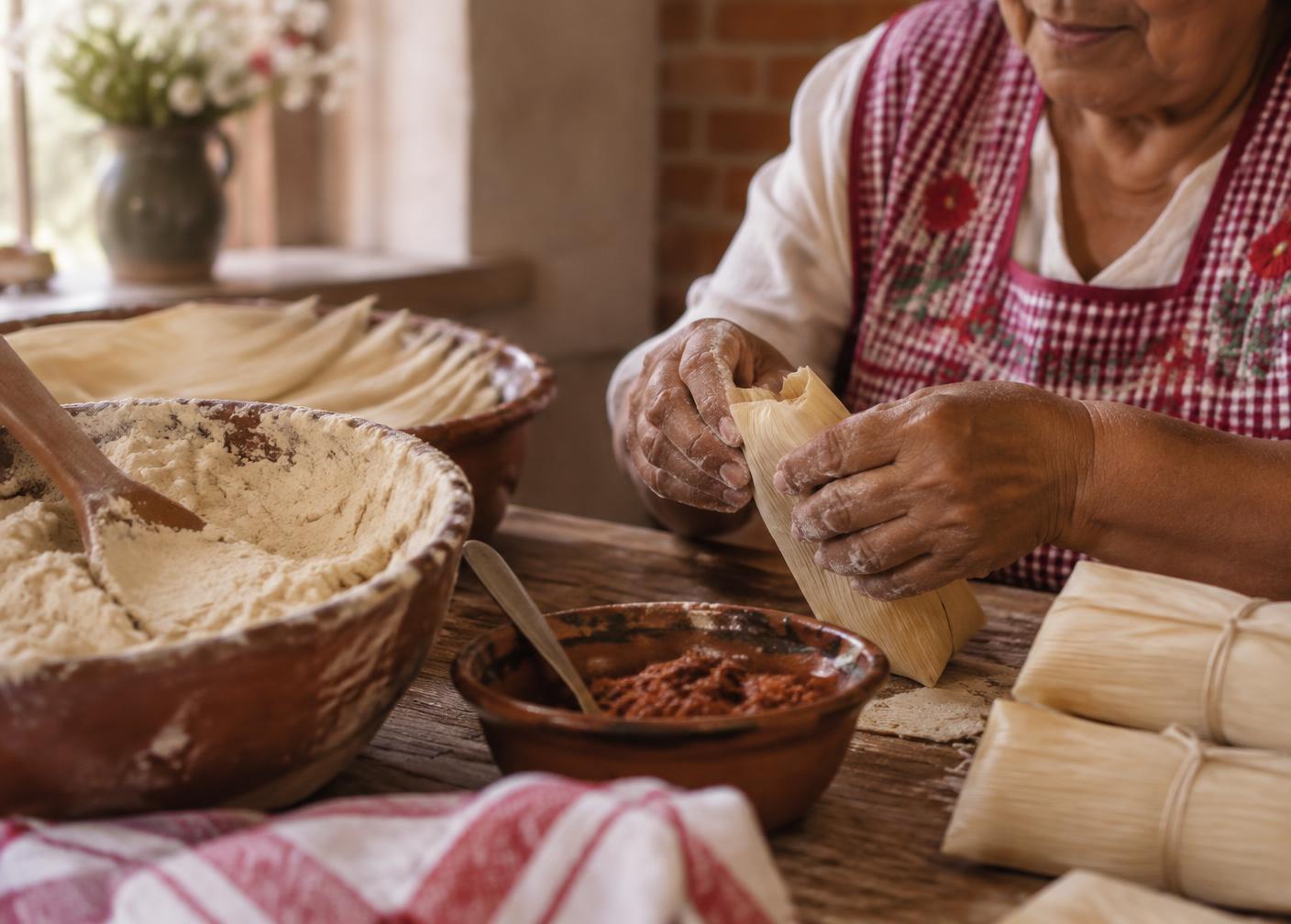
A very old dish
Tamales are older than Mexico. Corn dough steamed in a wrapper was eaten across Mesoamerica long before the Spanish arrived, and the word itself comes from the Nahuatl tamalli.
The idea is simple: masa beaten with fat until it is light, spread on a husk or leaf, filled, folded and steamed. Almost everything else changes from region to region, and often from house to house.
The Oaxacan way
In Oaxaca, tamales are often wrapped in banana leaves instead of corn husks. The leaf keeps the masa soft and gives it a faint green smell. A classic filling is mole negro, a dark, slow sauce that can take a day to make on its own.
That is part of why the design says Oaxaca Style. It points to a specific place, not a general idea of Mexican food.
Why it takes a crowd
Tamales are made by the dozen, which is why a tamalada, a tamale-making gathering, is a family event. Someone soaks husks, someone spreads masa, someone fills and folds, and someone watches the pot.
Tamaladas often come before Christmas and before Día de la Candelaria on February 2. The work is the point: the talking, the gentle arguing about how thin is too thin, and the tray that keeps filling up.
From the table to the shirt
The Mama's Tamales design keeps to that idea: one dish, one place, and a slogan, “Wrapped with love”, that is more literal than it sounds. Every tamale is folded by hand.
What we hold: cultural background only, from general reading. There is no family story here yet. If your family makes tamales and would like to share how, this page will be rebuilt around your words.