Pan dulce mornings — the shell on top of the concha
A tray, a pair of tongs and a sweet bread shaped like a seashell. A look at conchas and the Mexican panadería.
Written by Evelin from background reading · Mexico City and neighbourhood panaderías
The tray and the tongs
Walk into almost any Mexican panadería and the routine is the same: pick up a metal tray and a pair of tongs, move along the glass cases, and choose for yourself. Then the counter wraps it all in paper.
Conchas are usually somewhere near the front. They are soft, slightly sweet rolls with a crackly sugar topping scored to look like a seashell, which is where the name comes from. Concha means shell.
Where pan dulce comes from
Wheat arrived in Mexico with the Spanish, and French bakers who came in the nineteenth century added their own techniques. Mexican bakers took both and made something of their own: hundreds of sweet breads with playful names, from orejas to cuernos to conchas.
The concha is one of the most familiar. The dough is enriched and gently sweet; the topping is a simple paste of flour, sugar and fat, sometimes coloured pink or chocolate, pressed on and cut before baking.
At the table
Pan dulce is an everyday bread, often eaten in the morning or as an evening merienda, with coffee, café de olla or hot chocolate. Dunking is widely considered correct.
It is also what gets set out when people gather: while tamales steam, after a long day, when someone visits. Families who moved north brought the habit with them, and panaderías became a small piece of home in cities across the United States.
The shell on top
The concha's scored sugar shell gives it its name. The crisp top and soft bread are part of the same bite.
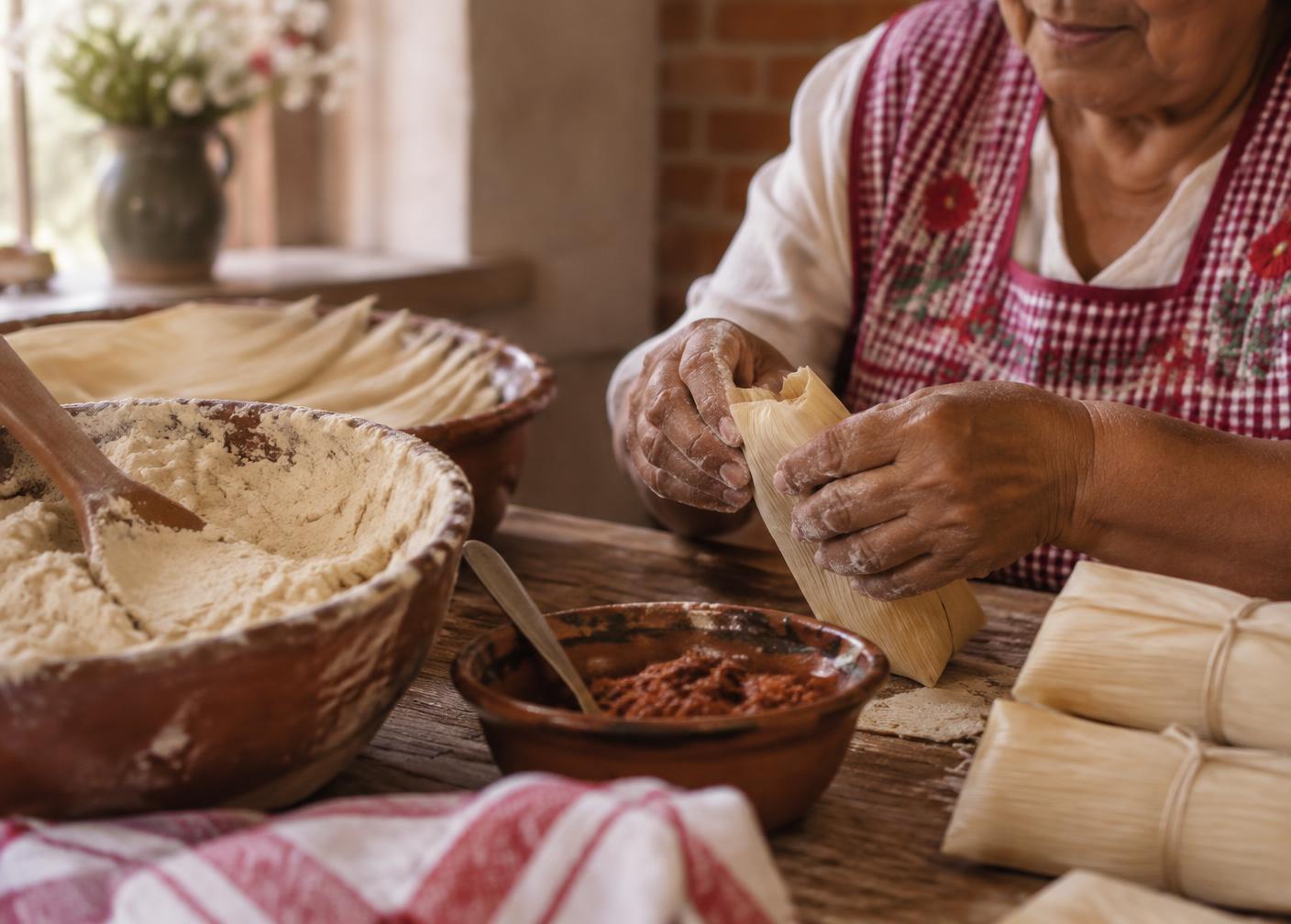
Tamales are another dish from Mexican kitchens. You can read that story too.
What we hold: cultural background only, from general reading. There is no family story here yet. If your family has a panadería order or a concha memory, this page will be rebuilt around your words.